Eyelid eczema: understanding the causes and symptoms to choose the right treatment

04/12/2025
FEMME-QUI-SE-GRATTE-LE-BRAS

Redness, itching, dryness… When eczema develops on the eyelids, daily life can become uncomfortable. And on this delicate area of ​​the face, every irritation is felt intensely: the slightest rubbing quickly becomes painful, applying makeup is often difficult, and even contact with water can become unpleasant.

Eyelid eczema is a common problem , affecting both women and men , and can occur at any age . This type of eczema requires gentle and targeted treatment due to the extremely thin skin of the eyelids.

In this article, we explain everything about eyelid eczema: why this area is so vulnerable, how to recognize the signs of eyelid eczema , and above all, how to take action on a daily basis with appropriate dermo-cosmetic care and treatments.

ZONES-AVEC-ECZEMA-SUR-UN-BRAS

Eczema: a chronic inflammation of the skin

What is eczema?

Eczema is a chronic inflammatory skin condition . It manifests as redness, intense itching, significant dryness , and sometimes scaling . Eczema generally progresses in flare-ups, with phases of intense symptom manifestation and phases of improvement.¹

There are two main forms of eczema :

  • Atopic eczema : it is associated with a genetic predisposition , with naturally dry and reactive skin.
  • Contact eczema : it is caused by an allergic reaction to a specific substance, such as a cosmetic, a metal, or a detergent.

On the face, and more specifically on the eyelids , eczema can quickly become problematic because the skin there is thinner, particularly exposed and fragile.

To learn more about atopic eczema , see our full article on atopic skin .

Origins and triggers of eczema

The causes of eczema are numerous and vary depending on the individual and the type of eczema. Among the most common factors are²:

  • A genetic predisposition : in some people, the skin barrier is naturally more fragile and allows allergens and irritants to pass through more easily.
  • Chronic inflammation : linked to the excessive release of pro-inflammatory cytokines (IL-4, IL-13) maintaining a persistent alteration of the skin barrier.
  • An overreaction of the immune system : a mechanism associated with that of chronic inflammation, where the immune defenses react excessively to normally harmless substances.
  • Contact allergens : perfumes, preservatives, nickel, false eyelash glues, nail polish, mascara, eye contour cream… Many everyday substances can trigger a local reaction on the eyelids.
  • Stress and fatigue : these factors often worsen flare-ups.
  • The environment : dry air, pollution, temperature variations, blue light, or repeated friction.

The special case of the eyelids : this is essentially contact eczema induced by an allergy to a substance applied or used on the face or another part of the body (cosmetics, nail polish, perfume, shampoo…) and which migrates or affects the eyelids through contact with the fingers.

The eyelids, an area of ​​high sensitivity

The thin skin of the eyelids

The skin on the eyelids is approximately 4 to 6 times thinner than that of other areas of the face. This extreme thinness makes it particularly vulnerable to external aggressors and allergens.

The skin on the eyelids has a more delicate structure than the skin on the face:

  • A thinner dermis : less rich in collagen and elastin fibers, its ability to regenerate and cope with inflammation is reduced.
  • Fewer sebaceous glands : with fewer protective lipids, the hydrolipidic film of the eyelid skin is not as effective as that of other areas of the face. As a result, the skin of the eyelids is naturally drier, less protected, and more prone to irritation or dehydration, especially in cold, windy, or fatigued weather.

Skin subjected to numerous stresses

In addition to its natural fragility, the skin of the eyelids is also one of the most stressed in the body . On average, we blink 10 to 15 times per minute, resulting in constant mechanical stress.

In addition to this, there are other everyday factors:

  • Makeup and makeup removal , often repeated, and sometimes with products that are too aggressive.
  • Involuntary friction (scratching, fatigue, contact lenses).
  • Pollution, dust, volatile allergens.
  • The migration of certain cosmetic or household products , such as nail polish, perfumes, or hair creams, which can reach the eyes by simple contact or manual transfer.

How to recognize eyelid eczema?

Eyelid eczema can sometimes be mistaken for a simple, temporary irritation , a seasonal allergy, or even eye strain. However, certain signs are unmistakable, with symptoms that are often visible, intensely felt, and that impact daily comfort.

Visual symptoms of eyelid eczema

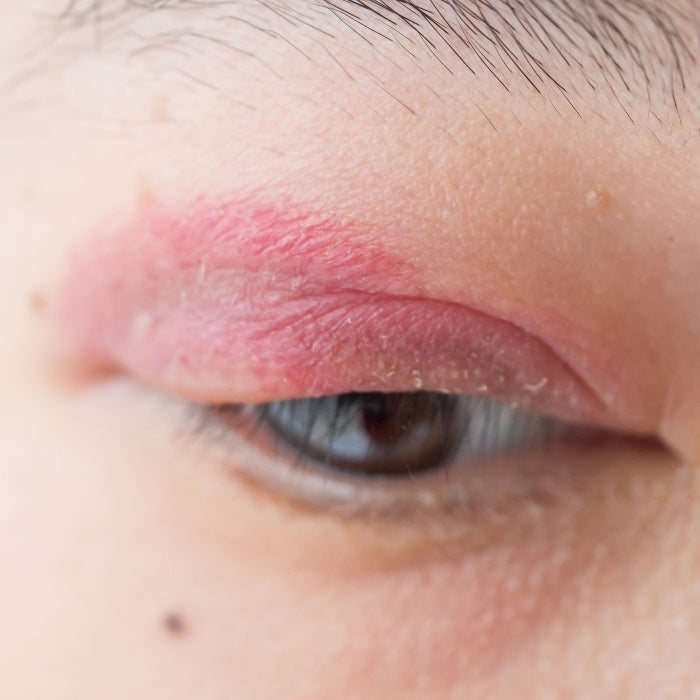
One of the first common signs of eyelid eczema is the appearance of redness on the upper, lower, or both eyelids . Whether diffuse or localized, this redness can worsen if left untreated.³

Other visual manifestations are frequent³:

  • Slight to moderate swelling of the eyelids : it is often more pronounced upon waking, giving the impression of a "puffy" eye.
  • Desquamation : the skin of the eyelids sheds slightly, in the form of small dry flakes.
  • A wrinkled appearance of the skin : with a rough texture and a slightly reddened or dull color, especially in cases of repeated flare-ups.
OEIL-D'UNE-FEMME-AVEC-UNE-TRACE-DE-CREME-SUR-LA-JOUE

The symptoms experienced from eyelid eczema

Beyond the visible signs, eyelid eczema is accompanied by sensations of varying intensity, such as³:

  • Intense itching : which can be difficult to bear and encourage rubbing, which generally worsens the lesions. The itching often occurs in the evening or at night.
  • Tightness : the skin feels dry, stiff, and loses its natural suppleness.
    Burns or tingling : especially during cleaning or application of unsuitable products.
  • A persistent discomfort : like a sensation of "sand under the eyelids".

These signs should alert you, especially if they are persistent or recurring. A consultation with a dermatologist will allow you to identify the cause and establish a suitable routine.

Possible eye complications of eyelid eczema

When it becomes chronic or is poorly managed, eyelid eczema can lead to several ocular complications³ :

  • The most common is blepharitis , an inflammation of the eyelid margins, often accompanied by crusting, redness, and persistent discomfort.
  • In more severe cases, atopic keratoconjunctivitis may occur, affecting the conjunctiva and cornea, with a risk of decreased visual acuity.
  • Dry eye , linked to an alteration of the tear film, is also common and can accentuate the sensations of burning or grit in the eyes.
  • In the long term, rarer but serious complications such as keratoconus (corneal deformation) or early cataracts may appear.

Dermatological and ophthalmological monitoring is therefore important in cases of recurrent eczema on the eyelids.

The impact of eyelid eczema on quality of life

Eczema, especially when it affects the face and eyelids, goes far beyond simple physical discomfort. It can truly impact daily life, self-image, social relationships, and even sleep quality . Unlike a hidden area, eyelid involvement is immediately visible, and this alters how one is perceived by others… and by one's own reflection.

  • Eyelid eczema and its aesthetic and social impact

    Our face is central to our communication and identity. And when our eyelids become red, swollen, flaky, and makeup becomes impossible or painful, it's normal for our self-esteem to be affected. Many people affected by eyelid eczema report feelings of embarrassment or shame, even when the symptoms are not clinically severe⁴:

    • 26.1% of patients report that their eczema represents a hindrance in their professional life .
    • 31.8% feel an impact on their personal lives .
    • 19.4% even say they feel looked at with disgust .
    • 14.4% report difficulties in their social relationships .
  • Fatigue, stress and anxiety: invisible but very real consequences

    Beyond the aesthetic discomfort, eyelid eczema can also lead to sleep disturbances, irritability, and persistent anxiety.
    Nighttime itching disrupts falling asleep and sleep cycles. Meanwhile, lack of rest exacerbates skin sensitivity and increases cortisol production, perpetuating a vicious inflammatory cycle.

    And those affected feel the negative consequences⁴:

    • 37.7% say they are regularly tired because of their chronic eczema.
    • 32.7% have difficulty falling asleep , linked to nighttime itching.

    When it affects the face and eyelids, eczema has a particularly significant impact on self-confidence and relationships, and can lead to feelings of isolation. Dermatological and psychological support may be necessary to improve patients' overall quality of life.

How to soothe and treat eyelid eczema?

The right steps to take in case of eyelid eczema

If you have eyelid eczema, the priority is to restore the skin barrier, reduce inflammation, and avoid irritants.
Here are the right steps to take to relieve symptoms and limit recurrences.

  • Identify and eliminate potential triggers

    In many cases, eyelid eczema is caused by allergies or irritants . The most common culprits are:

    • Mascaras, eyeliners, eyeshadows,
      Eye creams containing harsh perfumes or preservatives,
    • Nail polish (which can migrate to the eyelids through contact),
      Some household cleaners or laundry detergents, in case of transfer via hands.

    An allergy test can help you find the source of the allergy.

  • Clean gently, without soap

    Opt for a gentle cleanser, without soap or irritating surfactants, with a physiological pH.

  • Apply a high-tolerance moisturizing cream

    Choose a suitable face and/or eye cream with high tolerance, tested under ophthalmological control, and free of fragrance, alcohol, and colorants. The goal is to nourish, protect, and soothe without weighing down or irritating the skin.

  • Apply compresses of thermal water or cold saline solution

    Applied for 5 to 10 minutes, compresses of thermal water or saline solution relieve inflammation, reduce swelling, and soothe itching. A simple step to incorporate morning and/or evening during the acute phase.

  • Consult a dermatologist if symptoms persist

    If you have any doubts, experience frequent flare-ups, or suffer intense discomfort , medical advice is essential. A dermatologist can confirm the diagnosis, investigate possible allergic causes, and prescribe topical treatment (corticosteroids, calcineurin inhibitors, etc.) if necessary.

  • Be aware that other actions should be avoided, such as:

    • Rubbing or scratching your eyelids : even if the urge is strong, this aggravates the lesions and maintains the inflammation.
    • Using makeup or makeup remover wipes , even "hypoallergenic": during a crisis, these products remain too aggressive for the eye area.
    • Applying skincare products that are too rich, too perfumed , or not suitable for the sensitive eye area.
    • Self-medicating with corticosteroids , especially on the eyelids, where the very thin skin can suffer from uncontrolled use (risk of skin atrophy, glaucoma).

Suitable dermatological treatments to soothe sensitive eyelids

If you have eczema, opt for specifically adapted treatments:

1. Creams or balms formulated for this delicate area , that is to say, capable of:

  • Soothe sensations of irritation and burning,
  • Strengthen the skin barrier,
  • Reduce redness and tightness.

2. With ingredients dermatologically recognized for their benefits :

  • Active ingredients that strengthen the skin barrier , such as niacinamide or ceramide NP , help to restore the skin's protective function.
  • Soothing active ingredients to calm inflammation and sensations of irritation, such as panthenol, glycyrrhetinic acid (licorice extract) or thermal water.
  • Moisturizing and nourishing active ingredients such as glycerin , beeswax , shea butter or vegetable oils (linseed, sweet almond...) and essential fatty acids (omega 3-6) help to relieve dryness and improve skin comfort on a daily basis.

3. Minimalist formulas, without common allergens (perfumes, essential oils, alcohol…).
4. High tolerance formulas : tested and approved on atopic or hypersensitive skin.

Topicrem's answer:

Discover our DA PROTECT range of skincare products for atopic skin , designed to care for and soothe atopic skin . Our emollient face cream replenishes lipids, soothes, and hydrates to restore comfort. Formulated to be suitable for sensitive eyelids, it is dermatologically and ophthalmologically tested , and also tested and approved by members of the French Eczema Association.

All TOPICREM formulas have been designed to provide protective hydration and preserve the skin barrier of sensitive skin for the whole family.

To achieve this, our laboratory relies on its expertise derived from pharmaceutical excellence:

  • Selection of highly tolerable ingredients with proven efficacy,
  • Development of clinically tested formulas for sensitive skin,
  • Effectiveness proven by science and approved by consumers.

Through the comfort and emotional well-being they provide, our treatments help you feel confident with your skin and with yourself, to reveal yourself more fully to others, and thus to fully enjoy every moment of life.

Bibliographical references :

¹Weidinger, S., & Novak, N. (2016). Atopic dermatitis. Lancet (London, England), 387(10023), 1109‐1122. https://doi.org/10.1016/S0140-6736(15)00149-X)

²Thyssen JP, Heegaard S, Ivert L, Remitz A, Agner T, De Bruin-Weller M, Huldt-Nystrøm T, Korhonen L, Ivert LU, Leinonen P, Mandelin J, Särnhult T, Schopf T, Sundlisæter E, Thomsen SF, Tzellos T, Vestergaard C, von Kobyletzki L, Bradley M. Management of Ocular Manifestations of Atopic Dermatitis: A Consensus Meeting Using a Modified Delphi Process. Acta Derm Venereol. 2020 Sep 16;100(16):adv00264. doi:10.2340/00015555-3629. PMID: 32926175; PMCID: PMC9235002.
Link: https://pmc.ncbi.nlm.nih.gov/articles/PMC9235002/

³Pietruszyńska M, Zawadzka-Krajewska A, Duda P, Rogowska M, Grabska-Liberek I, Kulus M. Ophthalmic manifestations of atopic dermatitis. Postepy Dermatol Alergol. 2020 Apr;37(2):174-179. doi: 10.5114/ada.2018.79445. Epub 2018 Nov 6. PMID: 32489350; PMCID: PMC7262807.
Link: https://pmc.ncbi.nlm.nih.gov/articles/PMC7262807/

⁴Misery L, Seneschal J, Corgibet F, Halioua B, Marquié A, Merhand S, Le Fur G, Staumont-Salle D, Bergqvist C, Taieb C, Ezzedine K, Richard MA. Impact of Atopic Dermatitis on Patients and their Partners. Acta Derm Venereol. 2023 Jun 26;103:adv5285. doi: 10.2340/actadv.v103.5285. PMID: 37358393; PMCID: PMC10309060.
Link: https://hal.science/hal-04338806/document