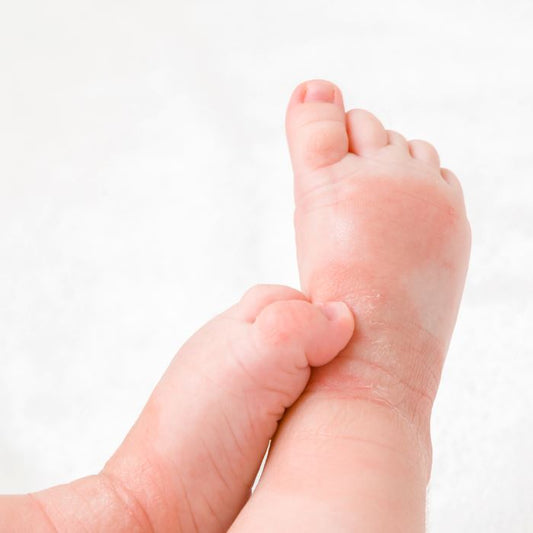
Atopic dermatitis: understanding and breaking the itch-scratch cycle

05/11/2026
Dermatite atopique : comprendre et briser le cycle démangeaison-grattage

Having an overwhelming urge to scratch, often more intensely in the evening or at night, scratching, feeling relief for a few seconds… Then wanting to do it again... And noticing that the skin is even redder and more irritated. People affected by atopic dermatitis know all too well the vicious itch-scratch cycle, where scratching provides temporary relief but actually perpetuates the discomfort.

Why does atopic skin itch so much? And why can the skin microbiome or stress amplify itching and fuel this vicious cycle?

In this article, we explain the mechanisms of itching in atopic dermatitis, what makes it worse, and the steps that help break this vicious cycle.

Atopic dermatitis in brief

Femme se grattant le bras rouge

Atopic dermatitis, a chronic inflammatory condition 

Atopic dermatitis, also known as atopic eczema, is a chronic inflammatory skin condition. It occurs in flares, interspersed with periods of remission of varying lengths.

Very common, it affects 10 to 15% of children and 3 to 5% of adults in Europe¹. Although it most often appears in the first few months of life, it can persist or reappear in adulthood.

A weakened skin barrier and reactive skin

Atopic skin has two major characteristics:

  • Une barrière cutanée altérée : chez de nombreuses personnes, des variations génétiques affectent la structure de la barrière et l’hydratation de la peau la rendant sèche, perméable, notamment aux irritants et aux allergènes².

  • Un système immunitaire hyper-réactif : face à des agressions même banales, la peau réagit de manière excessive par l’inflammation.

Itching, a major symptom of atopic dermatitis

Redness, patches, dryness… among all the manifestations of atopic dermatitis, itching (or pruritus) plays a major role: it affects more than 9 out of 10³ patients with atopic dermatitis. “Far more than a simple nuisance, it can severely disrupt quality of life (sleep, daily discomfort…).

To learn everything about atopic skin, check out our dedicated article.

The itch-scratch cycle of atopic skin 

Why does atopic skin itch more easily?

In atopic dermatitis, the skin does not react like healthy skin: its itch threshold is lowered⁴. This means that a stimulus that triggers no reaction in healthy skin triggers an uncontrollable urge to scratch in atopic skin: a simple rubbing of clothing, a change in temperature, perspiration... Several factors are involved.

Marked dryness linked to a lipid deficiency. 

The dryness of atopic skin is mainly explained by a lack of lipids. Between the cells of the stratum corneum, a lipid "cement" (consisting of ceramides, cholesterol, fatty acids) ensures the tightness of the barrier and retains water in the skin. 

In atopic skin, this lipid cement is depleted in ceramides⁵, and its composition is altered, with a decrease in long-chain ceramides, essential for an effective barrier. 

Under the effect of these lipid modifications, the skin barrier becomes less tight, allowing water to evaporate and irritants to penetrate, which maintains both dryness and itching.

Shéma grattage inflammation

Neurogenic inflammation: when nerves sustain inflammation the role of nerves in itching

Normally, nerve fibers in the skin transmit information to the brain. In the case of atopic skin, they also play an active role in a inflammatory process called neurogenic inflammation⁶.

When stimulated, nerve endings in the skin release neuropeptides, such as substance P.

This substance P plays a major role in inflammation. It is involved in:

  • The release of inflammatory molecules that weaken the skin barrier.  
  • The dilation of blood vessels, which can contribute to redness and swelling.
  • The activation of immune cells (mast cells) that release inflammatory molecules affecting the nerves, such as interleukin 31 (IL-31). Nicknamed the "itch cytokine," it is said to be pruritogenic, causing the urge to scratch. More numerous in atopic skin, mast cells also produce histamine, which contributes to inflammation and stimulates the nerves associated with itching⁷.

Substance P therefore participates in a dialogue between nerves and skin cells that perpetuates inflammation and itching.

How does scratching perpetuate itching?

How does scratching perpetuate itching?

Scratching provides immediate relief because the slight pain it causes temporarily masks the original itch.                       But this brief respite instead creates an itch-scratch cycle ⁸: 

  1.    Itching leads to scratching.       
  2.  Scratching further weakens the already compromised skin barrier.                                                                          
  3. Damaged skin allows allergens and irritants to penetrate.                                      
  4. Inflammation sets in, increasing nerve sensitivity.                                                          
  5. The itching returns, more intense than before.                                                                               

The more this cycle repeats, the more self-sustaining it becomes: the skin thickens, becomes irritated, and the itching becomes chronic. Breaking this cycle is therefore essential to restore more comfortable skin.

Microbiota and stress: two factors in itching

Le rôle du microbiote cutané dans la dermatite atopique

Notre peau abrite des milliards de micro-organismes formant le microbiote cutané et participant aux défenses de la peau.

Dans la dermatite atopique, la diversité du microbiote est réduite, et une bactérie, Staphylococcus aureus, se trouve particulièrement abondante⁸.

Des travaux de recherche récents révèlent que S. aureus activerait les nerfs de la démangeaison, déclenchant ainsi l'envie de se gratter⁹.

Atopie, stress et cortisol

La peau et le cerveau dialoguent en permanence à travers l’axe hypothalamo-hypophyso-surrénalien (axe HHS). Face à un stress, du cortisol, aussi appelé « hormone du stress » est naturellement libéré par l’axe HHS pour apaiser le stress grâce à ses propriétés anti-inflammatoires.

Chez la peau atopique, la réponse de l’organisme face au stress peut être perturbée. Ainsi, face à un même stress, la libération de cortisol peut être moins importante que chez une personne non atteinte¹⁰, ne lui permettant pas d’apaiser l’inflammation, et la laissant s'installer.

Par ailleurs, le stress ralentit la réparation de la barrière cutanée. Une peau déjà fragile reste alors plus longtemps exposée aux irritants.

Pour tout comprendre du dialogue entre la peau et le cerveau, retrouvez notre article dédié.

Stress et démangeaisons : une boucle qui s’auto-entretient

Dans la dermatite atopique, le lien entre stress et démangeaison fonctionne dans les deux sens. Les démangeaisons perturbent le sommeil, génèrent fatigue, irritabilité et tension nerveuse.

Ce stress réactive à son tour les mécanismes hormonaux et inflammatoires qui entretiennent la démangeaison.

Le grattage devient alors aussi une réponse à la tension nerveuse, parfois de manière automatique. C’est pourquoi apaiser la peau et apaiser l’esprit vont de pair.

How to break the itch-scratch cycle every day? 

Tips to reduce itching and scratching

While atopic dermatitis sometimes requires medical supervision, some simple steps can help reduce daily itching and break the scratching cycle:


  • Moisturize the skin morning and evening with an emollient suitable for atopic skin to restore the skin barrier and soothe dryness. 
  • Avoid scratching: try patting the area instead, or apply a cool compress or a product stored in the refrigerator. The cooling sensation can also provide comfort and relief in case of itching.
  • Choose gentle cleansing: take a short, lukewarm shower, use a soap-free cleanser, and pat the skin dry.
  • Keep nails short, especially in children, to reduce injury from scratching at night.
  • Choose soft fabrics, such as cotton, and avoid direct contact with wool.
  • Take time to relax: practice deep breathing, exercise, and soothing rituals, as stress can worsen itching.

If the itching persists or disrupts sleep, do not hesitate to consult your doctor or dermatologist.

DA PROTECT : un soin pour apaiser les peaux à tendance atopique

Fluide Frais Ultra-Apaisant DA PROTECT de TOPICREM Visuel du complexe neuro-apaisant DA PROTECT

Expert de la Dermatologie Bien-Être des peaux sensibles et fragilisées, TOPICREM a développé la gamme DA PROTECT, spécialement conçue pour accompagner au quotidien les peaux à tendance atopique.

Dernière innovation de la gamme, le Fluide Frais Ultra-Apaisant DA PROTECT est un geste SOS à la texture légère et fraîche, conçu pour agir au cœur du cercle vicieux des démangeaisons.

Sa Technologie Apaisante Neuro-Cutanée cible la substance P, ce neuromédiateur clé de l’inflammation neurogène.

Sur des peaux à atopie modérée, le Fluide Frais Ultra-Apaisant DA PROTECT réduit les démangeaisons dès 60 secondes*, et leur intensité est divisée par deux après 10 jours d’utilisation**.

Une formule relipidante pour renforcer la barrière cutanée

Sa formule associe cette technologie neuro-apaisante à une phase lipidique composée d’oléine de karité et d’huiles végétales de caméline et de tournesol, pour nourrir la peau et renforcer sa barrière.

Sans parfum, sans alcool (et sans menthol !), il convient aux peaux sensibles, très sèches et atopiques, du nourrisson (hors prématurés) à l’adulte.

*Auto-évaluation, étude clinique sous contrôle dermatologique et ophtalmologique sur 21 sujets.

**Étude clinique sous contrôle dermatologique et ophtalmologique sur 21 sujets, après 28 jours d’utilisation.

L’EXPERTISE TOPICREM

Les formules TOPICREM ont toutes été conçues dans le but d’apporter une hydratation protectrice et préserver la barrière cutanée des peaux sensibles de toute la famille.

Pour cela, le laboratoire s’appuie sur son expertise issue de l’excellence pharmaceutique :

  • Sélection d’ingrédients haute tolérance à l’efficacité prouvée,
  • Développement de formules cliniquement testées sur peaux sensibles,
  • Efficacité démontrée par la science et approuvée par les consommateurs.

Par le confort et le bien-être émotionnel qu’ils procurent, nos soins vous aident à vous sentir en confiance avec votre peau et avec vous-même, et ainsi à profiter pleinement de chaque moment de la vie.

Why does atopic dermatitis cause itching?

Atopic dermatitis combines a weakened skin barrier with inflammation. The skin retains less water and becomes more sensitive to irritants. These mechanisms promote itching, also known as pruritus.

Why does scratching worsen atopic skin?

Scratching provides temporary relief, but further damages the skin barrier. It promotes irritation and can cause lesions. The itching then returns and perpetuates the itch-scratch cycle.

How to manage atopic skin itching on a daily basis?

Apply a suitable emollient regularly, opt for short, lukewarm showers and use a soap-free cleanser. Soft clothing and short nails help limit irritation and injury. These steps complement the prescribed treatment.

Can stress worsen the itching of atopic eczema?

Stress can trigger flares of atopic eczema in some people. Conversely, itching and lack of sleep can increase stress. Relaxation can complement skincare and medical treatment.

When to consult a doctor for itching related to atopic dermatitis?

Consult a doctor if the itching persists, disrupts sleep, or if the lesions worsen. Pustules, unusual crusting, or fever also require medical attention to check for a possible infection.

Bibliographic references:   

                                                                                                                                                                                                                                                  ¹ French Society of Dermatology – Patient information sheets – Atopic dermatitis –                                                  Link: https://www.sfdermato.org/upload/fiche/etfad-great-version-france-22o32019-dd00991406282f168b08aec43c3798f0.pdf
² Dermato-Info.fr (information website of the French Society of Dermatology). Everything you need to know about atopic dermatitis.
³ Biazus Soares G, et al. Evaluating chronic pruritus prevalence, characteristics and effects on atopic dermatitis patients from a referral university hospital in São Paulo, Brazil: 
a cross-sectional study, British Journal of Dermatology. 2023;188(Supplement_3)
⁴ Tominaga M, Takamori K. Peripheral itch sensitization in atopic dermatitis. Allergol Int. 2022;71(3):265-277. doi: 10.1016/j.alit.2022.04.003.
⁵ Imokawa G, Abe A, Jin K, Higaki Y, Kawashima M, Hidano A. Decreased level of ceramides in stratum corneum of atopic dermatitis: an etiologic factor in atopic dry skin? J Invest Dermatol. 1991;96(4):523-526. doi: 10.1111/1523-1747.ep12470233.
⁶ Wong L-S, Yang J-H, Yen Y-T, Yang J-L. Pruritogenic mediators in atopic dermatitis: mechanisms of neurogenic crosstalk. J Cutan Immunol Allergy. 2026. doi: 10.3389/jcia.2026.16460.
⁷ Suárez AL, Feramisco JD, Koo J, Steinhoff M. Psychoneuroimmunology of psychological stress and atopic dermatitis: pathophysiologic and therapeutic updates. Acta Derm Venereol. 2012;92(1):7-15. doi: 10.2340/00015555-1188.
⁸ Kong HH, Oh J, Deming C, et al. Temporal shifts in the skin microbiome associated with disease flares and treatment in children with atopic dermatitis. Genome Res. 2012;22(5):850-859. doi: 10.1101/gr.131029.111.
⁹ Deng L, Costa F, Blake KJ, et al. S. aureus drives itch and scratch-induced skin damage through a V8 protease-PAR1 axis. Cell. 2023;186(24):5375-5393. doi: 10.1016/j.cell.2023.10.019. PMID: 37995657.
¹⁰ Lin TK, Zhong L, Santiago JL. Association between Stress and the HPA Axis in the Atopic Dermatitis. Int J Mol Sci. 2017;18(10):2131. doi: 10.3390/ijms18102131.