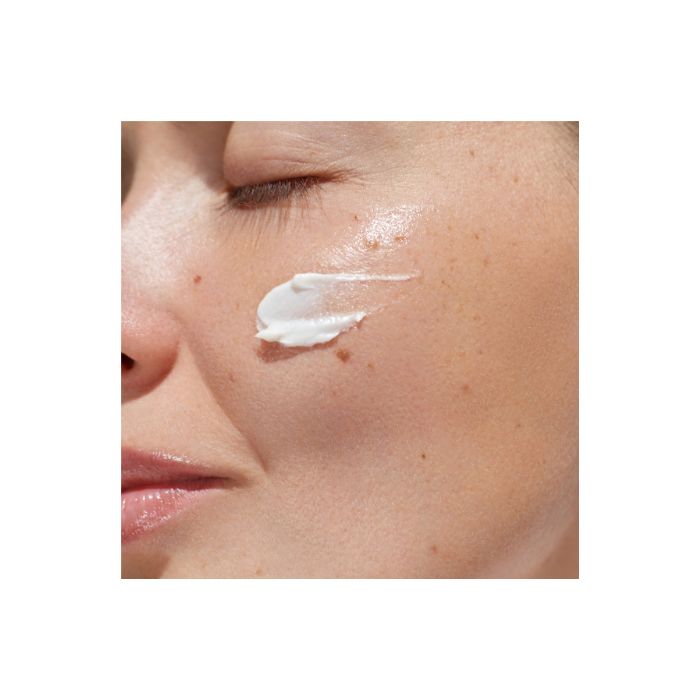
Hyperpigmentation: why do spots appear and how can they be reduced?

Welcome on our new website !
A dark spot does not always appear for the same reason. It may be linked to the sun, inflammation, hormonal changes, or simply time. In any case, it results from a local accumulation of melanin, the pigment that gives skin its color.
To fade it, there is no need to use a multitude of products: a consistent routine, well-chosen active ingredients, and appropriate sun protection are more useful than a succession of harsh cares. Here is how to understand these marks and take action without weakening the skin.
Hyperpigmentation occurs when an area of skin becomes darker than its usual color. The melanocytes, which are the cells that produce melanin, then produce more pigment or distribute it in a more concentrated way. A spot can therefore take the form of a brown mark, a trace left after a pimple, or an area with an uneven skin tone.
All skin tones can be affected. On light skin, repeated sun exposure is often very visible. On darker phototypes, an irritation or an imperfection can leave a more persistent mark. The origin of the spot is therefore just as important as its color.
Several factors can stimulate melanin production. They sometimes combine, which explains why two spots that look similar do not necessarily respond to cares in the same way.
Yes, its appearance can gradually fade if the scar is less than two years old, but the result depends on its origin, age, and skin type. The skin needs time to renew itself: consistency is more important than intensive action over a few days.
It is also necessary to avoid maintaining pigmentation. Without sun protection, UV rays can darken an existing spot and limit the benefits of targeted cares. Conversely, exfoliating too often or combining multiple irritating active ingredients can weaken the skin barrier and promote the formation of new post-inflammatory marks.
An effective anti-dark spot formula does not necessarily rely on a single ingredient. It generally combines unifying active ingredients, UV protection, and moisturizing agents that allow the skin to better tolerate the routine.
La niacinamide.
Cette forme de vitamine B3 est connue pour son action unifiante et apaisante. Elle convient à une approche progressive, notamment sur les peaux sensibles.
L’extrait d’algue.
Il est utilisé dans la gamme MELA pour compléter l’action unifiante de la niacinamide au sein du Complexe MELA breveté¹.
Les filtres solaires à large spectre.
Ils aident à prévenir l’accentuation des taches sous l’effet des UVA et des UVB.
Les actifs hydratants et apaisants.
Ils soutiennent la barrière cutanée et améliorent le confort, ce qui facilite l’utilisation régulière des soins ciblés.
However, the right choice depends on the sensitivity of the skin and the area to be treated. Introduce the treatments gradually and space out their use in case of discomfort.
A short routine is easier to follow and limits the risk of irritation. It can be organized into four simple steps:
1. Cleanse gently to remove impurities without stripping the skin.
2. Apply a targeted care to the face or affected areas, following the frequency indicated on the product.
3. Moisturize to preserve the skin barrier and skin comfort.
4. Protect from the sun every morning on exposed areas, then reapply according to exposure conditions.
TOPICREM has designed the MELA range for skin prone to dark spots, both on the face and body. It combines niacinamide and seaweed extract in the patented MELA Complex¹. For larger areas of the body, the MELA Ultra-Moisturizing Unifying Milk allows you to integrate targeted care while maintaining hydration.
Any pigmentation that appears suddenly, changes shape or color, bleeds, itches, or evolves rapidly should be shown to a dermatologist. Medical advice is also preferable when the origin of the spot is uncertain.

There is no standard timeframe for all dark spots. Their development depends on their cause, how long they have been present, the area concerned, and the consistency of your routine. Results are gradual; it is therefore better to evaluate the skin over several weeks rather than frequently changing products.
Yes. UVA rays are present in all seasons and can maintain pigmentation. The routine can therefore be continued all year round, by adapting the textures and frequency of the skincare products to the skin's tolerance. Sun protection remains particularly important on exposed areas.
Yes, especially if the trigger persists: sun exposure, repeated inflammation, or hormonal fluctuations. Once the spot has faded, maintaining photoprotection and avoiding picking at blemishes helps limit its reappearance or intensification.
Hyperpigmentation generally refers to areas of skin that become darker due to an increased production of melanin. Melasma is a specific form of hyperpigmentation, often linked to hormonal changes and sun exposure. It typically appears as brown or grayish patches on the face, particularly on the forehead, cheeks, or upper lip.
Yes, provided you choose suitable formulas and introduce cares gradually. Exfoliating too frequently or combining several potentially irritating active ingredients can weaken the skin barrier and accentuate certain marks. It is best to favor a short routine combining a targeted care, suitable hydration, and daily sun protection.
¹ Patent no. 2206538. The MELA Complex is not present in the MELA Exfoliating Bread.
Skin pigmentation is the natural biological process of coloring our skin. When it is well regulat...
Read the article
Ciblez efficacement vos taches pigmentaires grâce à une routine visage adaptée à votre peau avec ...
Read the article
Reducing pigment spots is a dream for many! These brown spots that appear on the face and certain...
Read the article

It's on the front lines against environmental aggressions. Always there to defend and protect us ...
Read the article