
Oxidative stress: how does skin defend itself against daily aggressions?

17/09/2026
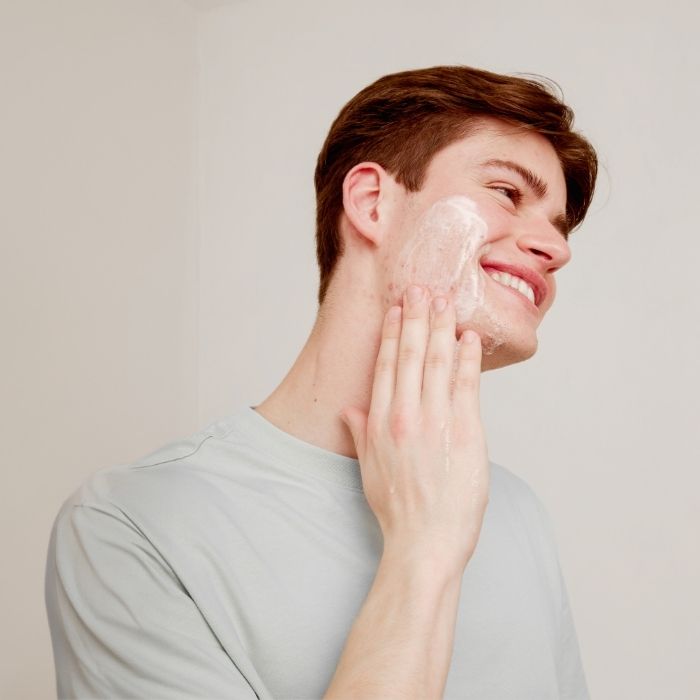
Un homme qui applique une crème AC CONTROL pour lutter contre le stress oxydatif


Our skin's life is not a calm river. Every day, it is subjected to various aggressions: UV, pollution, stress, lack of sleep, or an unbalanced diet – all factors that disrupt its balance. While most of the time it manages to cope, these attacks nevertheless promote the production of highly reactive molecules called free radicals.

In moderate quantities, free radicals participate in the normal functioning of the skin. But produced in excess, they promote oxidative stress, an invisible phenomenon that gradually alters the functioning of skin cells and favors the appearance of signs of skin aging: wrinkles, sagging, spots...

Fortunately, the skin has powerful antioxidant defense systems capable of limiting the damage from daily free radicals.

In this article, discover what oxidative stress is, why it appears, how the skin naturally defends itself, and why preserving these protective mechanisms is essential to maintain beautiful, radiant, and resilient skin over time.

What is oxidative stress in the skin?

The term "oxidative stress" is widely used today in discussions about skin aging. However, this phenomenon is sometimes misunderstood. While it is part of the normal functioning of our body, it only becomes problematic when it is excessive.

How does oxidative stress occur?

Our body's cells need energy to function. Like power plants, they use oxygen to produce this essential energy for their daily activities: cell renewal, collagen synthesis, wound healing, immune response, and maintenance of the skin barrier.

This energy production naturally generates highly reactive molecules called reactive oxygen species, or ROS. Some of these molecules are free radicals.

Under normal conditions, their production is perfectly controlled. Free radicals are immediately neutralized by the antioxidant systems present in the cells, which helps maintain a balance essential for proper skin function.

The phenomenon of oxidative stress appears when this balance is disrupted: free radicals become too abundant for the skin's defense capabilities and begin to react with cell components, gradually leading to their alteration 1.

In other words, oxidative stress corresponds to an imbalance between the production of pro-oxidant molecules and the antioxidant mechanisms responsible for neutralizing them.

What are free radicals used for?

Free radicals are most often perceived negatively. However, they participate in several essential physiological functions of the body 2.

Produced in small quantities, they are involved in particular in:
• Cell communication.
• The normal functioning of the immune system.
• Natural defense mechanisms against certain micro-organisms.
• The regulation of many biological processes.

Their harmful effects appear when their concentration increases excessively.

Did you know?

Free radicals are chemically unstable molecules. In seeking to become stable, they destabilize and alter the molecules in their environment, creating oxidative damage.

What factors promote oxidative stress in the skin?

As skin is directly exposed to its environment, it is one of the organs most affected by oxidative stress. Many factors promote the excessive production of free radicals; some come from our environment, others are related to our biological functioning 3.

  • External factors of oxidative stress

    •    Solar radiation, the main source of oxidative stress for the skin.
    •    Air pollution, with fine particles, ozone or certain gases from car traffic.
    •    Tobacco and its thousands of pro-oxidant chemical compounds.
    •    Environmental aggressions (wind, cold, significant temperature variations, repeated exposure to environmental pollutants).

  • Internal Factors of Oxidative Stress

    •   Natural aging: with age, cells are less effective at neutralizing free radicals, while the production of certain antioxidant enzymes decreases.
    •    Psychological stress: by promoting the production of cortisol and oxidizing molecules.
    •    Lack of sleep: which reduces the skin's natural repair capabilities and promotes the accumulation of oxidative damage.
    •    Diet: a diet poor in fruits, vegetables, and other antioxidant-rich foods limits the body's intake of antioxidants.
    •    Inflammation: which naturally generates the production of free radicals. 


To understand everything about skin inflammation, its mechanisms and its effects, discover our complete article.

3. How does skin naturally protect itself from oxidative stress?

The skin has different levels of antioxidant protection. There are two main categories of antioxidants.

Primary Antioxidant Systems

To neutralize free radicals, the skin has three primary antioxidant enzymes:
•    Superoxide dismutase, or SOD;
•    Catalase;
•    Glutathione peroxidase.

They are called primary because they act early in the oxidation reaction.
These enzymes work one after another to limit the accumulation of free radicals and protect skin cells.

Secondary Antioxidant Systems

Other antioxidants can be supplied to the skin, particularly through diet 4.

These compounds take over when free radicals escape primary antioxidants or are present in too large quantities.

Among the secondary antioxidants recognized for the skin are:
•    Glutathione.
•    Coenzyme Q10.
•    Selenium.
•    Resveratrol.
•    Derived plant antioxidants: such as polyphenols (red fruits, tea, cocoa, olive oil...), carotenoids (carrots, tomatoes, spinach, sweet potatoes), as well as vitamins C and E, provided respectively by fresh fruits and vegetables, and by vegetable oils, oilseeds, and seeds.

A varied diet rich in plant-based foods thus helps support the skin's natural antioxidant defenses.

Secondary antioxidants act synergistically: some neutralize free radicals while others regenerate them, such as vitamin C which allows vitamin E to regain its protective activity.

What are the consequences of oxidative stress on the skin?

When aggressions become too frequent or too significant, or when natural defenses weaken with age, free radicals accumulate, and so does the damage.

While not immediately visible, they progressively affect the functioning of skin cells and accelerate skin aging.

Which skin components are altered?

When free radicals are no longer sufficiently neutralized, they attack several essential cellular components 5:
•    Membrane lipids, whose oxidation weakens cell membranes and can impair the skin's barrier function.
•    Structural proteins, such as collagen and elastin, whose degradation leads to a loss of firmness and elasticity.
•    DNA, whose damage can disrupt the normal functioning of cells and limit their ability to produce the energy necessary for their activity.

What signs of skin aging can appear?

In the long term, these alterations promote chronic low-grade inflammation, decrease the skin's natural repair capabilities, and slow down cell renewal. 

Cells become less and less efficient, and aging begins to accelerate with the appearance of visible signs such as 6:
•    Deepening wrinkles.
•    A loss of firmness and elasticity.
•    Progressive tissue sagging.
•    A duller complexion.
•    The appearance of pigment spots.

Quels signes du vieillissement cutané peuvent apparaître ?

À long terme, ces altérations favorisent une inflammation chronique de faible intensité, diminuent les capacités naturelles de réparation de la peau et ralentissent le renouvellement cellulaire.

Les cellules deviennent de moins en moins performantes, et le vieillissement commence à s’accélérer avec l'apparition des signes visibles tels que⁶ :

  • Le creusement des rides.
  • Une perte de fermeté et d'élasticité.
  • Un relâchement progressif des tissus.
  • Un teint plus terne.
  • L'apparition de taches pigmentaires.

How to limit oxidative stress and boost the skin's antioxidant defenses?

Oxidative stress is part of the normal functioning of the skin. While it is impossible to eliminate it completely, it is possible to reduce it and limit its impact.

Limit the main sources of oxidative stress


A few simple steps can reduce daily exposure to factors that promote the production of free radicals.
• Protect yourself from UV rays.
• Avoid tobacco.
• Limit exposure to pollution.
• Ensure quality sleep.
• Better manage stress.

Support the skin's antioxidant systems

The skin's natural antioxidant mechanisms can also be supported by healthy lifestyle habits.

• A varied diet rich in plant-based foods naturally provides numerous antioxidant compounds, such as vitamins C and E, carotenoids, and polyphenols, found especially in colorful fruits and vegetables, oilseeds, vegetable oils, legumes, tea, and cocoa.

Regular and moderate physical activity also contributes to the proper functioning of the body. While very intense effort can temporarily increase the production of free radicals, moderate practice, on the contrary, promotes the development of natural antioxidant defenses.

Choose dermo-cosmetic products rich in antioxidants

Beyond lifestyle habits, it is possible to provide the skin with active ingredients with antioxidant properties.
Applied daily, they help strengthen the skin's antioxidant defenses.

Among the most used active ingredients are:
Vitamin C, recognized for its antioxidant properties and its role in skin radiance.
Vitamin E, which helps protect the lipids of the skin barrier against oxidation.
Coenzyme Q10, naturally present in cells, and whose concentration decreases with age.

Certain plants rich in polyphenols, such as green tea, grapes, and certain algae, are also recognized for their ability to strengthen natural skin antioxidant mechanisms against oxidative stress.

Overall, it is possible to support and preserve the skin's antioxidant defenses by choosing dermo-cosmetic products rich in antioxidant compounds.[


How does TOPICREM help protect sensitive skin?

At TOPICREM, we select various plant compounds for their proven antioxidant properties.

This is the case for echinacea and moringa extracts, used respectively in the SUN PROTECT and HYDRA+ ranges. Also present in the SUN PROTECT range, Buriti oil cA6.1TM6.2cA6.3 was specially chosen for its nourishing action combined with its richness in antioxidants.

All these antioxidant active ingredients boost the skin's natural defenses, allowing it to continue performing its main function, day after day: effectively protecting us from daily aggressions.

===All TOPICREM formulas have been designed to provide protective hydration and preserve the skin barrier of sensitive skin for the entire family.

To achieve this, the laboratory relies on its expertise derived from pharmaceutical excellence:
• Selection of high-tolerance ingredients with proven efficacy,
• Development of formulas clinically tested on sensitive skin,
• Efficacy demonstrated by science and approved by consumers.

Through the comfort and emotional well-being they provide, our skincare products help you feel confident in your skin and with yourself, allowing you to fully enjoy every moment of life.

Références bibliographiques :

¹Chen J, Liu Y, Zhao Z, Qiu J. Oxidative stress in the skin: Impact and related protection. Int J Cosmet Sci. 2021 Oct;43(5):495-509. doi: 10.1111/ics.12728. Epub 2021 Aug 28. PMID: 34312881.


²Poljšak B, Dahmane R. Free radicals and extrinsic skin aging. Dermatol Res Pract. 2012;2012:135206. doi: 10.1155/2012/135206. Epub 2012 Feb 29. PMID: 22505880; PMCID: PMC3299230.


³Hussein RS, Bin Dayel S, Abahussein O, El-Sherbiny AA. Influences on Skin and Intrinsic Aging: Biological, Environmental, and Therapeutic Insights. J Cosmet Dermatol. 2025 Feb;24(2):e16688. doi: 10.1111/jocd.16688. Epub 2024 Nov 27. PMID: 39604792; PMCID: PMC11845971.

⁴Kumar V, Tanwar N, Goel M, Khan M, Kumar D, Singh G, Mundlia J, Khatri N, Kumar A. Antioxidants for Skin Health. Recent Adv Food Nutr Agric. 2025;16(3):250-265. doi: 10.2174/012772574X311177240710100118. PMID: 39108105.

⁵Rinnerthaler M, Bischof J, Streubel MK, Trost A, Richter K. Oxidative stress in aging human skin. Biomolecules. 2015 Apr 21;5(2):545-89. doi: 10.3390/biom5020545. PMID: 25906193; PMCID: PMC4496685.

⁶Papaccio F, D Arino A, Caputo S, Bellei B. Focus on the Contribution of Oxidative Stress in Skin Aging. Antioxidants (Basel). 2022 Jun 6;11(6):1121. doi: 10.3390/antiox11061121. PMID: 35740018; PMCID: PMC9220264.

FAQ sur le stress oxydatif de la peau

Comment reconnaître les effets du stress oxydatif sur la peau ?

Le stress oxydatif n’est pas directement visible. À long terme, il peut toutefois contribuer à l’apparition d’un teint terne, de rides, d’une perte de fermeté ou de taches pigmentaires. Ces signes peuvent également être liés au vieillissement naturel ou à d’autres facteurs environnementaux.

Les UV favorisent-ils le stress oxydatif de la peau ?

Oui. Les rayons UV font partie des principales sources de stress oxydatif cutané. Ils favorisent la production de molécules oxydantes susceptibles d’altérer progressivement les lipides, les protéines et l’ADN des cellules de la peau.

Quels antioxydants sont bénéfiques pour la peau ?

Les vitamines C et E, les polyphénols, les caroténoïdes, la coenzyme Q10, le glutathion ou encore le sélénium participent aux défenses antioxydantes de l’organisme. Ils peuvent être apportés par l’alimentation et, pour certains, par des soins dermocosmétiques.

Une alimentation riche en antioxydants protège-t-elle la peau ?

Une alimentation variée, riche en fruits, légumes, graines, oléagineux et huiles végétales contribue à soutenir les défenses antioxydantes naturelles de l’organisme. Elle ne remplace toutefois pas une protection solaire adaptée ni une routine de soins répondant aux besoins de la peau.

Comment protéger quotidiennement sa peau du stress oxydatif ?

Il est recommandé de se protéger des UV, d’éviter le tabac, de limiter l’exposition à la pollution, de préserver son sommeil et d’adopter une alimentation équilibrée. L’utilisation de soins contenant des actifs antioxydants peut également contribuer à soutenir les mécanismes naturels de protection de la peau.