
Fluid, gel-cream, rich cream... how texture contributes to the effectiveness of a skincare product

20/10/2026
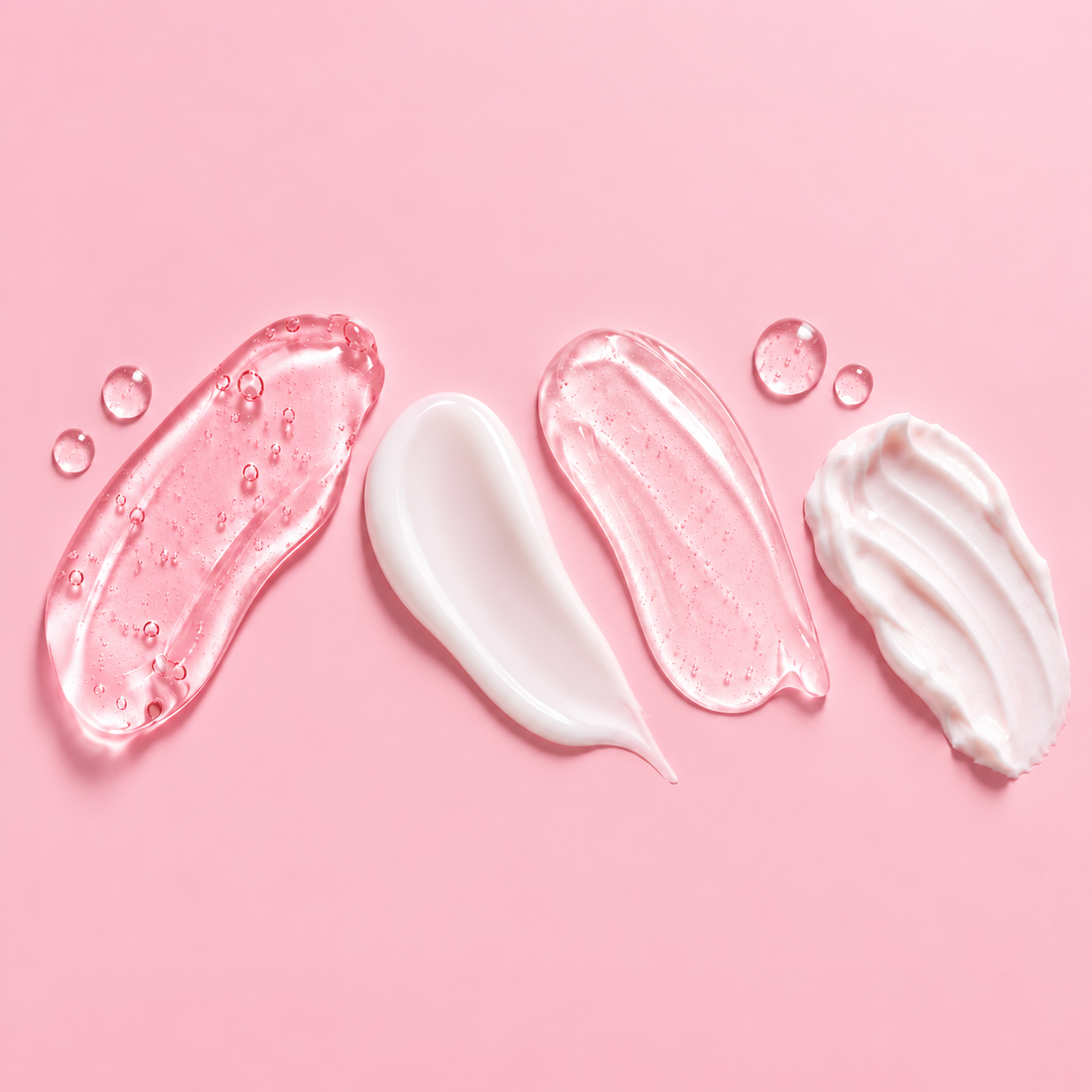
Fluide, gel-crème, crème riche... comment la texture participe à l’efficacité  d’un soin

A fluid that absorbs in seconds, a cream that melts under your fingers, a fresh and bouncy gel-cream... These differences in texture are not just a matter of comfort or aesthetic preference. They are based on a science in its own right: galenics, which is the art and technique of formulating a skincare product to give it its texture, consistency, and behavior on the skin.

Understanding cosmetic textures means choosing your skincare better, but above all, it means understanding why certain formulas are more effective for you than others, and how galenics and the pleasure of application are linked.

What is galenics in cosmetics?

How does galenics contribute to the efficacy of a skincare product?


Galenics refers to all the processes used to transform one or more ingredients into an applicable, stable, and effective formula: cream, gel, serum, mousse, balm, etc. Far from being a mere aesthetic choice, it determines how ingredients and active substances behave on the skin¹.

In concrete terms, galenics determines:

  • The stability of the formula over time (no phase separation, no alteration of active ingredients).
  • The perceived texture upon application (lightness, richness, spreadability, absorption).
  • The ability of active ingredients to act in the right place on the skin, at the right speed.

Why adapt galenics to active ingredients?

A moisturizing, soothing, or anti-aging active ingredient, no matter how powerful, will not provide the same benefits depending on the formula that carries it. The same molecule can be delivered in a light fluid or a rich cream, with different effects and indications. Matching the right galenics with the right active ingredient for the right skin type is therefore a true challenge for the formulators who develop these galenic systems.

Oil-in-water or water-in-oil emulsion: what are the differences?

An emulsion is a stable mixture of an aqueous phase and an oily phase, held together by an emulsifying system. Depending on which phase dominates, there are two main categories.

  • What is an oil-in-water (O/W) emulsion?

    In an O/W emulsion, fine oil droplets are dispersed in a continuous aqueous phase. The resulting texture is generally lighter, spreads easily, and absorbs quickly, leaving little to no greasy feeling on the skin. O/W emulsions are particularly suitable for combination to oily skin and for daytime applications.

  • What is a water-in-oil (W/O) emulsion?

    Conversely, a W/O emulsion disperses fine droplets of water within a continuous oil phase. Richer and more enveloping, this texture forms a more pronounced protective film on the skin's surface. W/O emulsions are suitable for very dry skin, periods of extreme cold, or night care.

Does an emulsion always determine the texture of a skincare product?

The type of emulsion influences the texture, but does not determine it entirely. The final consistency also depends on the gelling agents, thickeners, and emollients used in the formula². Thus, while a fluid and a rich cream can both be O/W emulsions, the dosage and choice of texturizing ingredients will create the difference in perceived consistency.

Tableau comparatif des textures cosmétiques

Perfecting the texture of a skincare product requires real formulation expertise to incorporate various ingredients and active agents. To learn everything about cosmetic formulation, read our full article: 

Cosmetic composition: learn to decode your beauty products

Différentes textures de soins cosmétiques MELA sur fond beige

 What are the different textures of cosmetic products? 

Beyond the structure of the emulsion, it is the perceived texture that most often guides the choice and appreciation of a daily skincare product. Here are the main families of textures found in dermocosmetics.

  • Fluid: a lightweight texture for combination to oily skin.

    The lightest texture, with minimal viscosity. Fluid spreads in a thin layer and absorbs almost instantly, without leaving a greasy film. It is particularly suitable for combination to oily skin or areas of the body requiring quick application over large surfaces.

    TOPICREM Example: AC CONTROL – Mattifying Fluid which mattifies, corrects excess sebum, and tightens pores for combination to oily skin.

  • Lotion and milk: textures for daily body care.

    A step above fluid in terms of richness, lotion (or body milk) retains a melting texture and fast absorption, while providing a little more comfort and wrap-around effect. It is suitable for daily use on the body, even for sensitive skin.

    TOPICREM Example : ULTRA-HYDRATING – Body Milk. This smooth milk moisturizes the skin of the entire family.

Texture gel-crème de la Gelée Fraîche Après-Soleil SUN PROTECT

The gel-cream: a fresh and light texture

The gel-cream is a hybrid texture that combines the freshness and lightness of a gel with the nourishment of a cream. This combination makes it a texture particularly appreciated by combination skin, especially during transitional seasons, when the skin's needs shift between hydration and lightness.

TOPICREM Example: SUN PROTECT – Fresh After-Sun Gel. Its texture provides a refreshing wrap to soothe, hydrate, and prolong a tan after sun exposure.

The cream: from a light to a rich finish

Cream remains the most common texture in cosmetics, with a wide range between light, fast-absorbing creams and rich creams with a denser, more enveloping feel. The richer a cream is, the more it is generally recommended for dry to very dry skin, or for times when the skin needs reinforced support.

TOPICREM Example: HYDRA+ – Radiance Moisturizing Cream. Available in 2 versions: 

  • A light version with a non-greasy and non-sticky finish.
  • A rich, creamier, and more enveloping version with no greasy or sticky finish.
Texture riche du Baume Émollient DA PROTECT

The balm: a dense texture for very dry areas

The densest texture with the highest fat content in our range, the balm forms a protective film that limits water loss and provides immediate comfort. It is particularly recommended for very dry or damaged areas (lips, elbows, hands) or extremely dry skin.


TOPICREM Example: ULTRA-HYDRATING – Comforting Body Balm. Its dense, melting texture is ideal for nourishing and fighting against skin dryness.

Why does sensory experience matter when using skincare products?

What role does touch play in the perception of a skincare product?


When applying a skincare product, specialized touch receptors in the skin transmit information to the brain that generates genuine emotional responses.³,⁴. A soft and fluid texture is thus associated with sensations of comfort and security, while a sticky or greasy texture can generate an uncomfortable feeling⁵ .


How does the pleasure of application promote consistency?


The sensoriality of a galenic formula can contribute to the clinical efficacy of a skincare product. Indeed, a product that is pleasant to use is a product that is applied more regularly. And yet, consistency of application is a determining factor in the results of a dermo-cosmetic product. In other words, the most suitable texture is not just the one that best suits your skin type on paper: it is also the one that makes you want to apply it every day.

The application of cosmetics can prove to be a true wellness experience. To learn more, discover our article dedicated to the evaluation of a cosmetic's effect on well-being and emotions.
 

How to choose the texture of a skincare product according to your skin type, the area, and the season?

Tableau des textures cosmétiques recommandées selon le type de peau

What other needs should be considered?


This table provides general guidance. To properly choose your cosmetic formulation, it is also important to consider your skin's sensitivity, its specific needs (blemishes, dehydration, redness...), as well as any active ingredients you may be looking for.

How does TOPICREM combine tolerance, efficacy, and sensoriality?

At TOPICREM, every texture is designed based on the specific skin need it is meant to address, and not the other way around. This logic guides the choice of galenics across our various product ranges.

Gamme AC CONTROL TOPICREM

Peaux mixtes à grasses : AC CONTROL

Pour les peaux mixtes à grasses, la gamme AC CONTROL mise sur des textures légères comme le Fluide Matifiant, qui permettent de véhiculer des actifs régulateurs de sébum (niacinamide, extrait de roucou, zinc) sans alourdir la peau ni favoriser les brillances.

Gamme HYDRA+ TOPICREM

Hydratation du visage : HYDRA+

Pour l'hydratation du visage, la gamme HYDRA+ s'appuie notamment sur la bétaïne, un actif hydratant et apaisant, porté par des textures crème conçues pour s'adapter à différents niveaux de besoin : c'est le principe de la Crème Éclat, déclinée en version légère et en version riche, pour que chacun puisse choisir l'enveloppement le mieux adapté à sa peau et à la saison.

Gamme ULTRA-HYDRATANT TOPICREM

Hydratation du corps : ULTRA-HYDRATANT

Pour l'hydratation du corps, la gamme ULTRA-HYDRATANT propose une variété de textures, du lait fluide au baume pour soutenir à la fois une application quotidienne sur de grandes surfaces, et des applications plus localisées sur les zones très sèches, avec l'urée comme actif hydratant de référence.

Gamme SUN PROTECT TOPICREM

Après l’exposition au soleil : SUN PROTECT

Enfin, la gamme SUN PROTECT, avec sa Gelée Fraîche Après-Soleil, illustre l'attention portée à la sensorialité au-delà du simple soin hydratant : une texture rafraîchissante pensée pour transformer un geste de soin post-exposition en un véritable moment de plaisir et de réconfort.

  • All TOPICREM formulas have been designed to provide protective hydration and preserve the skin barrier of sensitive skin for the whole family. 

    To achieve this, the laboratory draws on its expertise rooted in pharmaceutical excellence:

    • Selection of high-tolerance ingredients with proven efficacy,

    • Development of formulas clinically tested on sensitive skin,

    • Efficacy demonstrated by science and approved by consumers. 


    Through the comfort and emotional well-being they provide, our skincare products help you feel confident in your skin and yourself, and thus fully enjoy every moment of life.

What is the difference between a fluid and a rich cream?

The fluid is lightweight, spreads in a thin layer, and absorbs quickly. A rich cream offers a denser, more enveloping sensation. The choice depends in particular on your skin type, the area of application, and the season.

Which texture should I choose for combination to oily skin?

A fluid or gel-cream is generally suitable for combination to oily skin. These light textures provide comfort without leaving a greasy residue. The precise choice also depends on the skin's needs and the desired active ingredients.

Which texture is best for very dry skin?

A rich cream can be suitable for dry to very dry skin. For particularly dry areas, such as the lips, elbows, or hands, a balm provides a denser texture and a protective film.

What is the difference between an O/W emulsion and a W/O emulsion?

In an oil-in-water (O/W) emulsion, water constitutes the continuous phase: the sensation is generally light. In a water-in-oil (W/O) emulsion, the continuous phase is oily: the texture is often richer and more enveloping. Other ingredients also influence the final consistency.

Why does a skincare product's texture matter for its effectiveness?

Galenics play a role in the stability of the formula and how the active ingredients behave on the skin. A pleasant texture can also encourage regular application, which contributes to the results of a skincare routine.

Bibliographic references:
¹ On the Key Role of Polymeric Rheology Modifiers in Emulsion-Based Cosmetics. Cosmetics. 2025;12(2):76. MDPI.
² Huynh A, et al. Measurements meet perceptions : rheology–texture–sensory relations when using green, bio-derived emollients in cosmetic emulsions. Int J Cosmet Sci. 2021. PMID: 32886359.
³ Rolls ET. The affective and cognitive processing of touch, oral texture, and temperature in the brain. Neurosci Biobehav Rev. 2010 Feb;34(2):237-45. PMID: 18468687.
⁴ McGlone F, Wessberg J, Olausson H. Discriminative and affective touch: sensing and feeling. Neuron. 2014 May 21;82(4):737-55. PMID: 24853935.
⁵Guest S, Ma A, Mehrabyan A, Essick G, Hopkinson A, McGlone F. Perception of fluids with diverse rheology applied to the underarm versus forearm skin. Somatosens Mot Res. 2012;29(3):89-102.