
The Best Skincare Ingredients for Skin Healing

23/07/2026
Les meilleurs actifs dermatologiques pour la cicatrisation de la peau

Scratches, irritation, dermatological or aesthetic procedures, weakened skin… Our skin sometimes needs to repair itself. To do this, it naturally implements a complex biological mechanism: healing.

Certain dermatological active ingredients are particularly recognized for supporting this skin repair process. Among them, copper, manganese, zinc, hyaluronic acid, and Centella asiatica play an important role in care for weakened skin.

In this article, we explain the role of these dermatological active ingredients and their benefits in supporting skin repair.

Healing: The Natural Skin Repair Process

The skin has a remarkable repair capacity when its integrity is compromised.
Skin healing relies on a succession of stages involving different cellular and molecular actors.

The 3 major phases of healing

There are three major healing phases 1:

  • The vascular and inflammatory phase: during the first few days, bleeding stops and the skin cleans the injured area.
  • The proliferative phase: the skin produces new tissues to repair the damaged area.
  • The remodeling phase: from the 3rd week, the skin gradually strengthens to improve the quality and resistance of the scar.

Conditions necessary for good healing

To heal effectively, skin healing must meet several conditions:

  • Good communication between skin cells (fibroblasts, keratinocytes, immune cells) and the dermal extracellular matrix.
  • The presence of numerous nutrients and biological mediators, including certain trace elements and compounds naturally present in the skin.
  • Effective antioxidant defenses. During an aggression, skin cells naturally produce free radicals (or reactive oxygen species) which can damage skin compounds and slow down repair.

Why does healing vary according to skin type?

Finally, not all skin heals in the same way. Age, genetics, and health status influence the skin's ability to regenerate and heal 2.

Find out everything you need to know about the skin healing process in our complete article.

The Role of Repairing Active Ingredients in Supporting Healing

The Essential Needs of Compromised Skin

When skin is compromised or damaged, its proper healing depends on:

  • Restoring the skin barrier
  • Maintaining good hydration
  • Supporting cell renewal
  • Soothing inflammation
  • Assisting tissue regeneration

For this reason, dermatological repair treatments often combine several complementary active ingredients. Among the most commonly used are copper, manganese, zinc, hyaluronic acid, and Centella asiatica.

The main dermatological active ingredients for wound healing

Copper: a key asset for supporting collagen


Copper is a trace element naturally present in the body. It is involved in numerous enzymatic reactions related to tissue repair and maintenance.

To regain its strength and suppleness, damaged skin must produce new supporting fibers, such as collagen and elastin. Copper plays an important role in this process by helping the skin build and strengthen these fibers. It thus contributes to the formation of repaired, more resistant and more supple skin.

Copper is also involved in other ancillary wound healing mechanisms 3:
  • Supporting fibroblast activity, thus promoting the formation of collagen necessary for skin reconstruction.
  • The formation of new blood vessels, also known as angiogenesis, to provide the oxygen and nutrients essential for tissue repair.
  • Protection against oxidative stress by being a component of antioxidant enzymes such as superoxide dismutase (Cu/Zn-SOD).
  • Balancing the skin microbiota by limiting the proliferation of certain microorganisms on the skin's surface.

Zinc: an essential trace element for cell renewal


Zinc is probably one of the most studied trace elements in skin repair.
Naturally present in the epidermis and dermis, it is involved in hundreds of enzymatic reactions essential for tissue maintenance.

In wound healing, zinc participates in several processes 3:

  • The proliferation of keratinocytes, the main cells of the epidermis, which gradually migrate to cover the damaged area.
  • The multiplication of dermal fibroblasts.
  • The synthesis of proteins and DNA, two essential factors for cell renewal. Sufficient zinc availability thus promotes the production of new cells necessary for tissue reconstruction.
  • The control of inflammation by helping to maintain an appropriate reaction for the proper course of natural skin repair mechanisms.

Finally, zinc also has indirect antioxidant properties. It is involved in the activity of several protective enzymes (such as superoxide dismutase, SOD) that help neutralize free radicals produced during inflammation.

In dermatology, zinc is particularly valued for its versatility and excellent tolerance. It is used in repairing care for damaged, irritated, or blemish-prone skin in adults, children, and infants.

Manganese: a support against oxidative stress


Often associated with copper and zinc in repairing treatments, manganese is an essential trace element for the proper functioning of many enzymes involved in tissue protection.

Manganese contributes to the skin's natural defenses against oxidative stress by participating in the functioning of a key antioxidant enzyme, manganese-dependent superoxide dismutase (MnSOD). When an injury occurs, repair mechanisms produce more free radicals. By participating in antioxidant defenses, manganese helps protect cells from oxidative stress and supports proper wound healing. 4.

Hyaluronic acid: hydration and skin repair


Naturally present in the skin, hyaluronic acid is a molecule capable of retaining very large quantities of water. A true hydration reservoir, it can bind up to 1,000 times its weight in water, thus helping to keep the skin supple, comfortable and plump.

During skin repair, hyaluronic acid thus helps maintain a moist environment favorable to healing, by facilitating the migration of cells involved in tissue reconstruction.

But its role is not limited to hydration. Hyaluronic acid is also a major structural component of the extracellular matrix. It forms a three-dimensional network in which fibroblasts, cells involved in skin repair, circulate.
During the first phases of healing, hyaluronic acid production naturally increases to facilitate cell migration and tissue reconstruction. Its abundance in the dermis thus helps organize the granulation tissue forming before the mature scar tissue 5.

In dermatological repair treatments, hyaluronic acid is thus valued for its dual action: supporting the hydration of weakened skin while accompanying healing mechanisms.

Manuka honey: a repairing active ingredient for weakened skin


Particularly rich in bioactive compounds such as methylglyoxal (MGO), Manuka honey is recognized for its antimicrobial and repairing properties. It helps protect the wound against microorganisms, maintain a moist environment favorable to healing, and modulate inflammation. Studies also show that it helps limit oxidative stress, promotes the proliferation of fibroblasts and keratinocytes involved in tissue repair, and participates in collagen remodeling during scar maturation 6.

Why combine several repairing active ingredients?

Skin healing relies on numerous biological mechanisms occurring simultaneously.
This is why repairing dermatological formulas generally combine several complementary active ingredients.

This complementarity addresses various needs of compromised skin while respecting its natural repair mechanisms.


Skin healing involves numerous cellular and molecular players. Copper, zinc, manganese, and hyaluronic acid act at different levels of this process: supporting cellular renewal, protecting against oxidative stress, maintaining an environment favorable to repair, synthesizing collagen, and restructuring tissues.

To address these crucial stages in the repair of compromised and irritated skin, the TOPICREM laboratory developed its CICA+ range of repair treatments. By combining copper, zinc, manganese, and hyaluronic acid, CICA+ treatments support the skin's natural repair mechanisms and help restore comfort, suppleness, and skin integrity. Designed for compromised blemish-prone skin, the AC CONTROL Compensating Cream leverages the benefits of Manuka honey to support the skin's natural regeneration mechanisms.
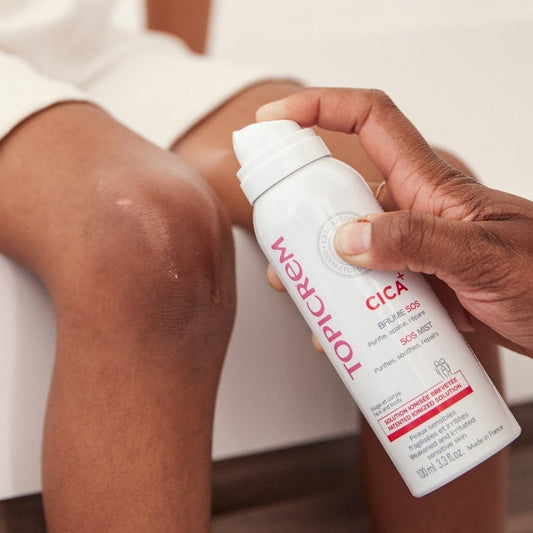
TOPICREM skincare for weakened skin

Understanding the mechanisms of inflammation helps to better identify the skin's needs and adopt more appropriate daily habits. A gentle, moisturizing, and protective routine, combined with skincare products that respect the skin barrier, helps to maintain skin comfort and limit factors that can perpetuate inflammation.

At TOPICREM, expertise in sensitive and fragile skin guides the development of our skincare products. This commitment at the heart of Research & Development allows us to constantly identify and select active ingredients that are effectively soothing for skin inflammation, capable of sustainably improving patients' daily well-being.

Formulas developed for sensitive skin

TOPICREM formulas have all been designed to provide protective hydration and preserve the skin barrier of sensitive skin for the whole family.

To achieve this, the laboratory relies on its expertise derived from pharmaceutical excellence:

  • Selection of high-tolerance ingredients with proven efficacy,
  • Development of formulas clinically tested on sensitive skin,
  • Efficacy demonstrated by science and approved by consumers.

Through the comfort and emotional well-being they provide, our skincare products help you feel confident in your skin and with yourself, allowing you to fully enjoy every moment of life.

FAQ on Dermatological Actives and Skin Healing

What active ingredients help with skin healing?

Copper, zinc, manganese, hyaluronic acid, Centella asiatica, and Manuka honey are among the active ingredients recognized for supporting the repair of weakened skin. They address various needs: hydration, cell renewal, antioxidant protection, and maintaining the skin barrier.

Why is zinc important for compromised skin?

Zinc contributes to the renewal of epidermal cells and the maintenance of the skin barrier. It also helps support natural skin repair mechanisms, particularly when the skin is irritated, weakened, or prone to blemishes. It is a valued active ingredient in repairing skincare for its versatility.

What is the role of hyaluronic acid in wound healing?

Hyaluronic acid helps maintain a moist environment favorable to skin repair. It retains water, supports the hydration of weakened skin, and contributes to its suppleness. It also aids in tissue reconstruction due to its role in the extracellular matrix.

Why combine copper, zinc, and manganese in a restorative treatment?

These three trace elements have complementary actions. Copper supports collagen formation, zinc participates in cell renewal, and manganese contributes to antioxidant defenses. Together, they support several natural mechanisms involved in skin repair.

What skincare should you choose for weakened or irritated skin?

For damaged or irritated skin, it is advisable to choose a repairing dermatological treatment formulated for sensitive skin. TOPICREM CICA+ treatments notably combine copper, zinc, manganese, and hyaluronic acid to support the skin's natural repair mechanisms.