Acne: which active ingredients for acne-prone skin?

23/09/2026
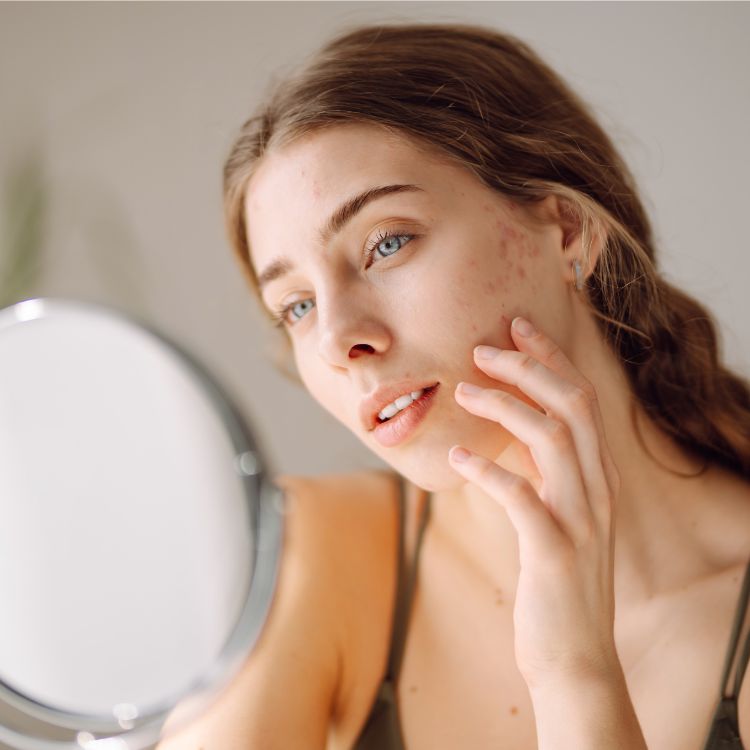
JEUNE FEMME SE REGARDANT DANS LE MIROIR AVEC DES PROBLEMES ACNEIQUES

Acne is one of the most common skin concerns, affecting both adolescents and adults. Dermocosmetic products specifically formulated for this purpose help reduce the signs of mild to moderate acne, such as blemishes, redness, and excess sebum. To achieve this, various active ingredients have proven their effectiveness, precisely targeting the specific needs of oily, acne-prone skin.

In this article, discover the dermatological active ingredients to prioritize for moderate acne and how to build an appropriate skincare routine.

Understanding acne to better care for your skin

What is acne?

Acne is a chronic inflammatory condition of the pilosebaceous unit, which consists of the hair follicle and the sebaceous gland. It occurs mainly in areas rich in sebaceous glands, such as the face, back, chest, or shoulders.

Often associated with adolescence, acne affects nearly 85% of young people between 12 and 24 years old¹. However, it does not always disappear with age: many adults can also experience acne breakouts at various times in their lives:

  • Approximately 8% of adults between 25 and 34 years old¹.
  • Approximately 5% of women over 40 years old².

Depending on its intensity, acne can be mild, moderate, or severe.

To learn everything about acne-prone skin, check out our dedicated article.

Process sous la peau de l'apparition d'un bouton d acne

Why does acne appear?

Acne results from several mechanisms acting in concert:

  • Excess sebum production: under the influence of hormones, particularly androgens, the sebaceous glands become more active and produce more sebum.
  • Less harmonious cell renewal: with an accumulation of dead cells in the pores, which promotes their obstruction and the formation of the microcomedone, the first stage of acne lesions.
  • The development of Cutibacterium acnes: this bacterium, naturally present on the skin, multiplies significantly and promotes inflammation responsible for red, sometimes painful, pimples.

These mechanisms of hyperseborrhea, pore obstruction, bacterial proliferation, and inflammation create a true vicious cycle that causes the different forms of acne.
What are the main manifestations of acne?

Acne can manifest in different ways depending on the person.

The most frequent acne lesions are:

  • Microcomedones, invisible to the naked eye.
  • Blackheads (open comedones).
  • Whiteheads (closed comedones).
  • Red papules.
  • Pustules containing pus.
  • Deeper nodules in severe forms.

Even when spots disappear, they can leave post-inflammatory pigment marks or, in some cases, longer-lasting scars.

To learn everything about acne-prone skin, check out our dedicated article.

What impact can acne have on quality of life?


Beyond its visible manifestations, acne can have a real impact on quality of life³.

Because it mainly affects the face, it can alter self-image, decrease self-confidence, and make certain social situations uncomfortable. In both adolescents and adults, acne can lead to lower self-esteem (67% in adolescent girls and 45% in adolescent boys⁴.

Difficulties in social life and professional activity can also occur: for 25% of students, acne represents a major problem⁴, while approximately 28% of adults report feeling frustrated or embarrassed due to acne⁵.

Treating acne therefore also means contributing to the well-being of those affected.
When lesions become more significant or persist despite an adapted routine, medication for acne may be recommended by a dermatologist or doctor. Dermocosmetic skincare then plays a key role in supporting the skin throughout this treatment.


Which dermatological active ingredients should be prioritized for acne-prone skin?


Not all skincare products designed for acne-prone skin address the same needs of skin subject to acne breakouts. Here is an overview of active ingredients recognized for their efficacy in cases of mild to moderate acne.


To better understand the specific needs of combination to oily skin, also check out our dedicated article.

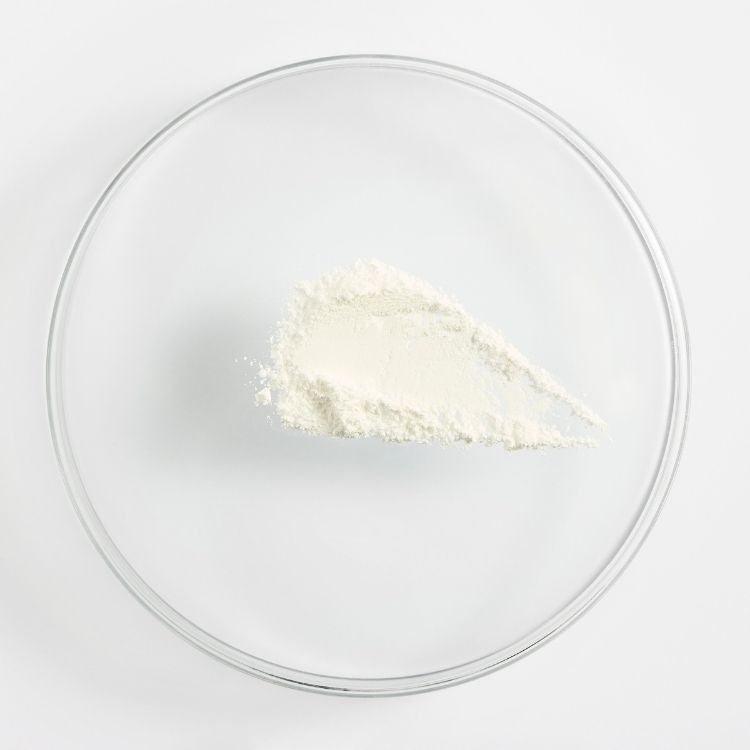
Poudre de Gluconate de  Zinc dans la gamme AC Control

Zinc gluconate to rebalance oily skin

Zinc is one of the most widely used active ingredients in skincare products designed for combination to oily and acne-prone skin⁶.

It helps regulate sebum production by the sebaceous glands, thereby limiting the excess sebum responsible for shine. It also helps purify the skin and limit the appearance of blemishes. Thanks to its high tolerance, it is particularly suitable for skin weakened by anti-acne treatment.

Poudre d'acide succinique dans la gamme AC Control

Succinic acid to improve the appearance of blemishes

It helps improve the appearance of blemishes. Through its keratolytic activity, it eliminates dead cells and visibly refines skin texture. Its high tolerance makes it a particularly interesting active ingredient for skin prone to blemishes that has become more sensitive due to treatment.

Also discover the AC CONTROL Intensive Serum, formulated with succinic acid, among other ingredients.

Niacinamide for strengthening the skin barrier

Also known as vitamin B3, niacinamide is currently one of the most well-documented active ingredients in dermocosmetics.

It helps to strengthen the skin's barrier function, helps preserve its moisture, and helps to reduce feelings of discomfort associated with dryness. It also helps to improve the appearance of residual redness and to rebalance oily skin⁶.

A versatility that explains its use in many routines targeting acne-prone skin.

Extrait de Roucou dans la gamme AC Control

Annatto extract to help rebalance excess sebum

Derived from the seeds of Bixa orellana, annatto extract is particularly beneficial for supporting the balance of combination to oily skin. In addition to its keratoregulatory action, it helps regulate excess sebum, thereby helping to limit shine. This dual action makes it a choice active ingredient for visibly improving the quality of acne-prone skin 8, 9.

Skin healing is an important mechanism in the management of acne, particularly to limit the formation of acne marks. Healing active ingredients are generally included in formulas dedicated to mild to moderate acne. Discover the best healing active ingredients in our dedicated article.

What dermocosmetic routine should you adopt for acne?

If your skin is prone to acne, here are some tips to optimize your routine:

  • How to cleanse acne-prone skin without being harsh?


    Cleansing the skin morning and evening with a gentle cleanser suitable for oily skin is essential.
    The goal is to eliminate impurities and excess sebum without further damaging the skin barrier. Harsh soaps, repeated cleansing, or mechanical scrubs should be avoided, as they can increase feelings of discomfort.

    Also discover the AC CONTROL Purifying Cleansing Gel.

  • Should you moisturize oily, acne-prone skin?


    Contrary to popular belief, even oily skin needs hydration.
    Applying a highly moisturizing treatment helps preserve the barrier function, improve skin comfort, and limit tightness.

    To support weakened or dried-out skin, also discover the AC CONTROL Compensating Moisturizing Cream.

    • Choose cares formulated for acne-prone skin

  • Which skincare products should you choose for acne-prone skin?


    Formulas specifically designed to meet the needs of blemish-prone skin commonly combine several complementary dermatological active ingredients, such as zinc, succinic acid, niacinamide, or annatto.

    It should also be noted that oily skin prefers light, non-greasy textures to limit the shine promoted by its characteristic excess sebum.

    Discover the entire AC CONTROL range dedicated to combination, oily, and/or blemish-prone skin.

  • Why use sun protection if you have acne?


    As with all skin types, the daily application of suitable sun protection is essential. It helps protect the skin from sun-related damage and thus limits the appearance of pigment marks frequently caused by blemishes.

    To learn more, also discover how to protect acne-prone skin from the sun.

What mistakes should you avoid with acne-prone skin?


Beyond the use of unsuitable dermo-cosmetic products, certain habits can further weaken the skin during acne treatment, such as:

  • Using products that are too harsh.
  • Overusing exfoliating or irritating active ingredients.
  • Stopping the application of a moisturizer.
  • Picking or popping pimples.
  • Constantly changing your routine.
  • Neglecting sun protection.

Ultimately, to take care of your acne-prone skin, opt for a simple, consistent, and adapted routine.

To manage the symptoms of acne, dermo-cosmetics offer active ingredients with recognized benefits such as zinc, succinic acid, niacinamide, or even annatto. By balancing sebum production, regulating the elimination of dead cells, or providing a soothing action, they act on the various factors involved in acne breakouts.

Which active ingredients are found in the AC CONTROL range by TOPICREM?

Les 7 produits de la gamme AC Control contre les imperfection pour les peaux acnéiques

At TOPICREM, we use these active ingredients in our AC CONTROL range dedicated to combination, oily, and/or blemish-prone skin.

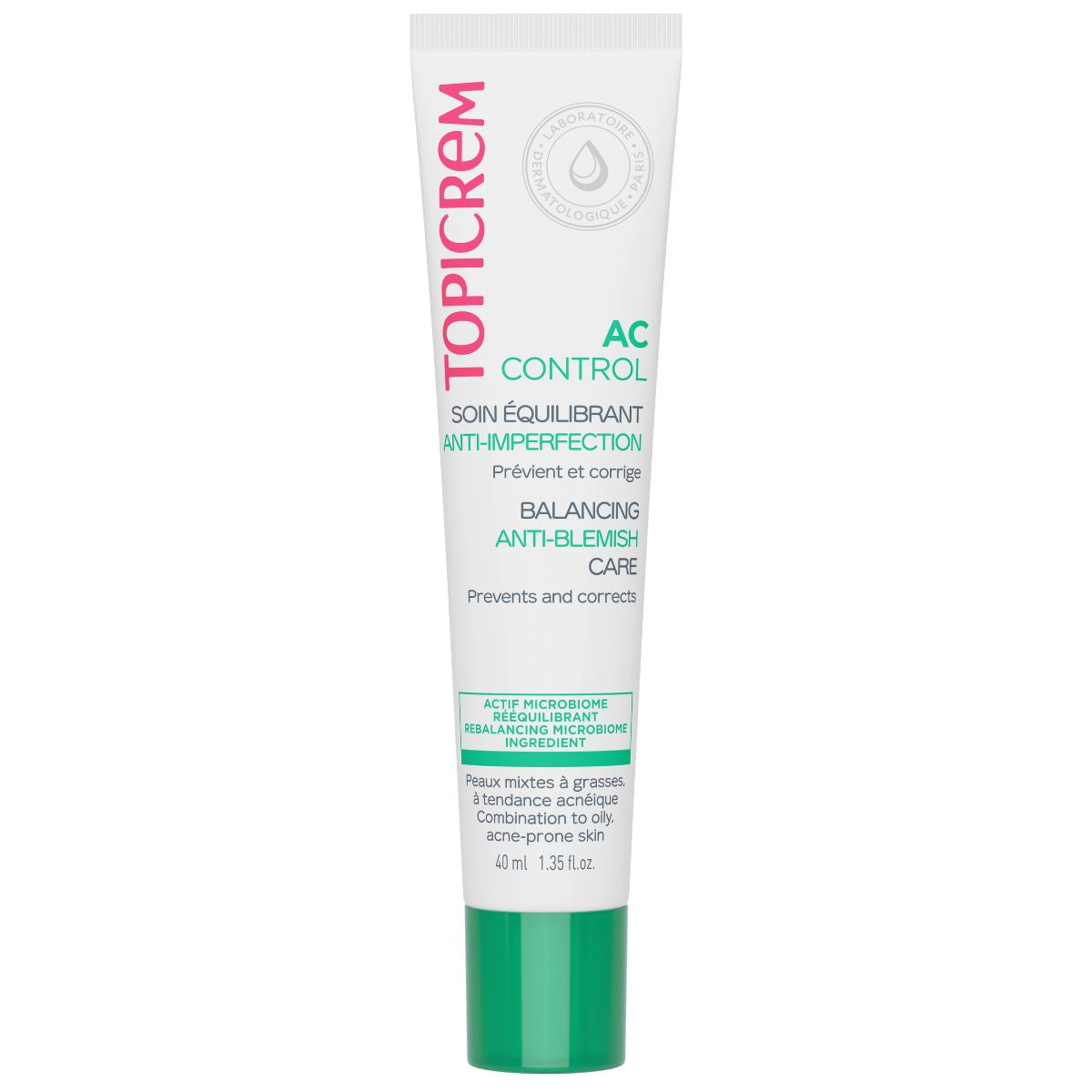
In addition to the zinc gluconate found in the Micellar Water and the Purifying Cleansing Gel, the range capitalizes on the benefits of the combination of niacinamide + annatto extract (Sebo-Correct Complex) in the Mattifying Fluid and the Anti-Blemish Balancing Care.

A flagship product of the range, the Intensive Serum reinforces the Sebo-Correct Complex with succinic acid for targeted action on blemishes.

Also discover the AC CONTROL Anti-Blemish Balancing Care.

As well as the AC CONTROL Intensive Serum.

Discover the entire TOPICREM AC CONTROL range.

Because every skin is unique, do not hesitate to ask your dermatologist or pharmacist for advice in order to choose the most suitable products for your routine.

TOPICREM formulas have all been designed with the goal of providing protective hydration and preserving the skin barrier of sensitive skin for the whole family.

To this end, the laboratory draws on its expertise rooted in pharmaceutical excellence:

  • Selection of high-tolerance ingredients with proven efficacy.
  • Development of formulas clinically tested on sensitive skin.
  • Efficacy demonstrated by science and approved by consumers.

Through the comfort and emotional well-being they provide, our skincare products help you feel confident in your skin and in yourself, and thus fully enjoy every moment of life.

Which active ingredients should be prioritized for acne-prone skin?

Zinc, succinic acid, niacinamide, and annatto extract are among the active ingredients used in skincare products for acne-prone skin. They help address various needs, including excess sebum, blemishes, redness, or damage to the skin barrier.

Which active ingredient should I choose for oily, blemish-prone skin?

Zinc and annatto extract are particularly beneficial for oily, blemish-prone skin. They help regulate excess sebum and reduce shine. They can be combined with other complementary active ingredients in a routine specifically formulated for acne-prone skin.

Is niacinamide suitable for acne-prone skin?

Yes, niacinamide is frequently used in skincare products for acne-prone skin. It helps strengthen the barrier function, preserve skin hydration, and reduce sensations of discomfort. It also helps improve the appearance of redness and rebalance oily skin.

Should oily, acne-prone skin be moisturized?

Yes. Oily skin also needs hydration. Using a suitable moisturizer daily helps preserve the skin's barrier function and comfort. For skin prone to shine, it is best to favor light, non-greasy textures.

What routine should I adopt for acne-prone skin?

A routine for acne-prone skin can combine gentle cleansing morning and night, a suitable moisturizer, active ingredients that target blemishes, and daily sun protection. It is best to keep your routine simple and consistent rather than using too many products or exfoliating active ingredients.

Bibliographic references:

¹ Burris, J., Rietkerk, W., & Woolf, K. (2013). Acne: the role of medical nutrition therapy. Journal of the Academy of Nutrition and Dietetics, 113 3, 416-30 . https://doi.org/10.1016/j.jand.2012.11.016.

²Dawson, A., & Dellavalle, R. (2013). Acne vulgaris. BMJ : British Medical Journal, 346. https://doi.org/10.1136/bmj.f2634.

³Hussein RS, Bin Dayel S, Abahussein O, El-Sherbiny AA. Influences on Skin and Intrinsic Aging: Biological, Environmental, and Therapeutic Insights. J Cosmet Dermatol. 2025 Feb;24(2):e16688. doi: 10.1111/jocd.16688. Epub 2024 Nov 27. PMID: 39604792; PMCID: PMC11845971.

⁴Kumar V, Tanwar N, Goel M, Khan M, Kumar D, Singh G, Mundlia J, Khatri N, Kumar A. Antioxidants for Skin Health. Recent Adv Food Nutr Agric. 2025;16(3):250-265. doi: 10.2174/012772574X311177240710100118. PMID: 39108105.

⁵Nandy P, Shrivastava T (January 22, 2024) Exploring the Multifaceted Impact of Acne on Quality of Life and Well-Being. Cureus 16(1): e52727. doi:10.7759/cureus.52727

⁶Searle TN, Al-Niaimi F, Ali FR. Cosmeceuticals in acne vulgaris: from mechanism of action to clinical application. Skin Health Dis. 2026 Jan 9;6(2):77-89. doi: 10.1093/skinhd/vzaf104. PMID: 41923969; PMCID: PMC13036733.

⁷De Lucas R, Martínez H, Nieto C, Ruiz-Alonso C, Bermejo R, Carrón N, Garcia-Segura S, Gonzalez-Torres P, Palacios-Martínez D, Guerra-Tapia A, Bou L, Pérez M. New clinical approach in facial mild-moderate acne: Re-stabilization of skin microbiota balance with a topical biotechnological phytocomplex. J Cosmet Dermatol. 2024 Nov;23(11):3616-3627. doi: 10.1111/jocd.16452. Epub 2024 Aug 28. PMID: 39205505.

⁸Kurokawa I, Kobayashi M, Nomura Y, Abe M, Kerob D, Dreno B. The Role and Benefits of Dermocosmetics in Acne Management in Japan. Dermatol Ther (Heidelb). 2023 Jul;13(7):1423-1433. doi: 10.1007/s13555-023-00943-x. Epub 2023 Jun 20. PMID: 37338719; PMCID: PMC10307753.⁹Tan J. In: Eur Acad Dermatol and Venereol Annual Meeting; 2022.